
Cloud computing has fundamentally changed how organizations build, deploy, and use technology. Instead of purchasing hardware or installing software locally, companies now rely on cloud-based services that deliver computing resources over the internet. At the core of this transformation are three primary cloud service models: Infrastructure as a Service (IaaS), Platform as a Service (PaaS), and Software as a Service (SaaS).
Understanding these models is essential for anyone exploring cloud computing, software development, or modern IT systems. Each model offers a different level of control, responsibility, and convenience, making them suitable for different use cases.
Understanding Cloud Service Models
Cloud service models define how much control users have over infrastructure, platforms, and applications. They also determine how responsibilities are shared between cloud providers and users.
In simple terms:
- IaaS provides raw computing infrastructure.
- PaaS provides a platform for building applications.
- SaaS provides ready-to-use software.
These models form a layered structure, where each level builds upon the previous one. As you move from IaaS to SaaS, the level of user control decreases while convenience increases.
Infrastructure as a Service (IaaS)
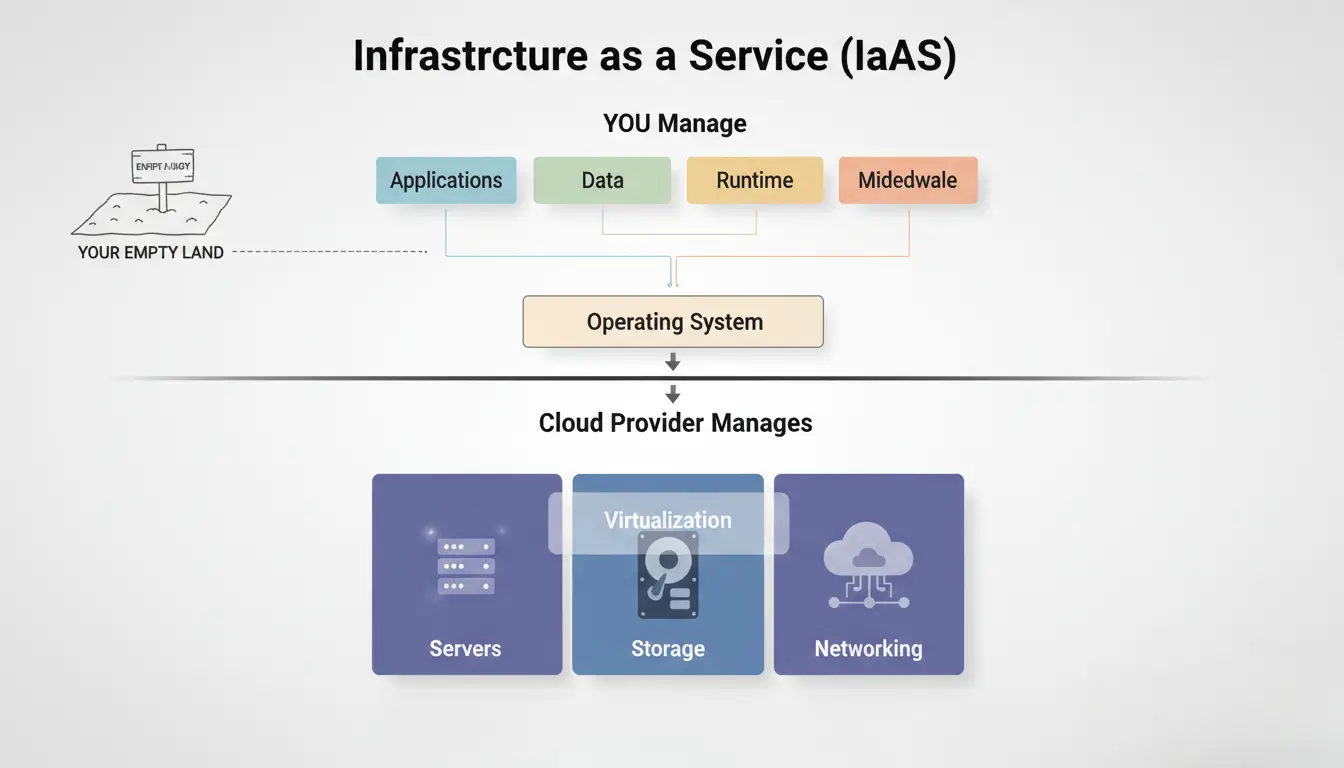
Infrastructure as a Service (IaaS) is the most fundamental cloud service model. It provides virtualized computing resources such as servers, storage, networking, and operating systems over the internet. Instead of purchasing physical hardware, users rent infrastructure from cloud providers.
Key Features of IaaS
IaaS offers high flexibility and scalability. Users can configure virtual machines, install operating systems, and manage applications according to their requirements. This model is ideal for organizations that need full control over their computing environment without investing in physical infrastructure.
Another important feature of IaaS is its pay-as-you-go pricing. Users pay only for the resources they consume, which helps optimize IT costs.
Examples of IaaS
Common examples of IaaS include:
- Virtual servers and cloud storage
- Networking services and load balancers
- Backup and disaster recovery solutions
IaaS is widely used by startups, enterprises, and developers who require customizable infrastructure for applications, websites, and data processing.
Typical Use Cases
Organizations use IaaS for hosting websites, running enterprise applications, testing software, and managing large-scale data workloads. It is particularly useful for businesses that need scalable infrastructure without long-term hardware commitments.
Platform as a Service (PaaS)
Platform as a Service (PaaS) provides a complete development environment in the cloud. It allows developers to build, test, and deploy applications without worrying about underlying infrastructure. Cloud providers manage servers, operating systems, and runtime environments, enabling developers to focus solely on application development.
Key Features of PaaS
PaaS simplifies the application development process by offering preconfigured tools, frameworks, and databases. This reduces the complexity of managing infrastructure and accelerates software development.
Another advantage of PaaS is collaboration. Multiple developers can work on the same project using shared cloud-based tools, improving productivity and efficiency.
Examples of PaaS
Typical PaaS offerings include:
- Application hosting platforms
- Managed databases
- Development frameworks and tools
PaaS is widely adopted by software developers, IT teams, and organizations building web and mobile applications.
Typical Use Cases
PaaS is ideal for developing APIs, microservices, and cloud-native applications. It is also used for continuous integration and deployment (CI/CD), enabling faster innovation and shorter development cycles.
Software as a Service (SaaS)
Software as a Service (SaaS) is the most user-friendly cloud service model. It delivers fully functional software applications over the internet. Users access these applications through a web browser without installing or maintaining software locally.
Key Features of SaaS
SaaS offers simplicity and convenience. Users do not need technical expertise to use SaaS applications because cloud providers handle infrastructure, updates, and maintenance.
Another key feature is accessibility. SaaS applications can be accessed from any device with an internet connection, making them suitable for remote work and collaboration.
Examples of SaaS
Common examples of SaaS include:
- Email and collaboration tools
- Customer relationship management (CRM) systems
- Online productivity software
- File sharing and communication platforms
SaaS is used by individuals, businesses, and organizations of all sizes.
Typical Use Cases
SaaS is widely used for communication, project management, accounting, and customer support. It enables organizations to adopt software solutions quickly without complex installation processes.
Key Differences Between IaaS, PaaS, and SaaS
The primary difference between IaaS, PaaS, and SaaS lies in the level of control and responsibility.
| Feature | IaaS | PaaS | SaaS |
|---|---|---|---|
| Control Level | High | Medium | Low |
| Infrastructure Management | User | Provider | Provider |
| Application Development | User | User | Provider |
| Software Maintenance | User | Shared | Provider |
| Ease of Use | Moderate | High | Very High |
This comparison highlights how each model caters to different user needs and technical expertise.
Choosing the Right Cloud Service Model
Selecting the appropriate cloud service model depends on organizational goals, technical requirements, and available resources.
IaaS is suitable for organizations that require maximum flexibility and control over infrastructure. PaaS is ideal for developers who want to focus on building applications without managing hardware. SaaS is best for users who need ready-to-use software without technical complexity.
In many cases, organizations use a combination of these models to achieve optimal efficiency and performance.
Real-World Applications of Cloud Service Models
In practice, cloud service models are often used together. For example, a company may use IaaS for hosting servers, PaaS for developing applications, and SaaS for daily business operations. This integrated approach demonstrates how cloud computing supports diverse technological and business needs.
Why IaaS, PaaS, and SaaS Matter in Modern IT
Understanding IaaS, PaaS, and SaaS is crucial for anyone interested in cloud computing or digital transformation. These models define how technology is delivered, managed, and consumed in the cloud era.
As organizations increasingly adopt cloud-based solutions, knowledge of cloud service models becomes a valuable skill for IT professionals and technology enthusiasts.
Conclusion
IaaS, PaaS, and SaaS represent the foundational service models of cloud computing. Each model offers unique advantages and addresses different technical and operational requirements. By understanding these models, individuals and organizations can make informed decisions about cloud adoption and strategy.
Cloud service models are not just technical concepts; they are the backbone of modern digital infrastructure. As cloud technology continues to evolve, IaaS, PaaS, and SaaS will remain central to the future of computing.
Frequently Asked Questions (FAQs)
1. What is the main difference between IaaS, PaaS, and SaaS?
The main difference lies in control and responsibility. IaaS offers infrastructure, PaaS provides a development platform, and SaaS delivers ready-to-use software.
2. Are IaaS, PaaS, and SaaS used together?
Yes, many organizations use all three models simultaneously to meet different technological needs.
3. Do beginners need to learn IaaS, PaaS, and SaaS?
Yes, understanding these models helps beginners grasp how cloud computing works and how services are delivered.
4. Which cloud model is easiest to use?
SaaS is the easiest to use because it requires minimal technical knowledge and provides ready-to-use applications.