
Ever been stuck at a bus stop, hungry, tired, and one wrong word away from confusion? Basic travel phrases fix that fast. In airports, cafés, and small shops, you don’t need perfect grammar. You need a few polite words that open doors.
Learn five short phrases before you go. You’ll sound respectful, get help sooner, and feel calmer. Best of all, locals often appreciate the effort, even if your accent isn’t perfect.
Why these five phrases matter more than a big vocabulary
In March 2026, many Americans are taking shorter trips and leaning on tech tools to travel smoother, but a phone can’t replace a friendly first moment. These five phrases help you start politely, repair misunderstandings, and keep interactions warm. They fit almost anywhere: ordering food, checking into a hotel, buying tickets, or asking directions on public transit.
If you want extra examples beyond this list, keep a simple phrase reference like common conversational phrases in multiple languages bookmarked.
One simple habit helps: say the polite word first, then point to a map, a menu item, or your destination.
How one polite word can change the way people treat you
A clear “hello” signals respect. “Please” slows the moment down. “Thank you” closes the loop. People often respond with more patience when you sound considerate, even if you’re searching for the right words.
The 5 must-learn travel phrases (and when to use each one)
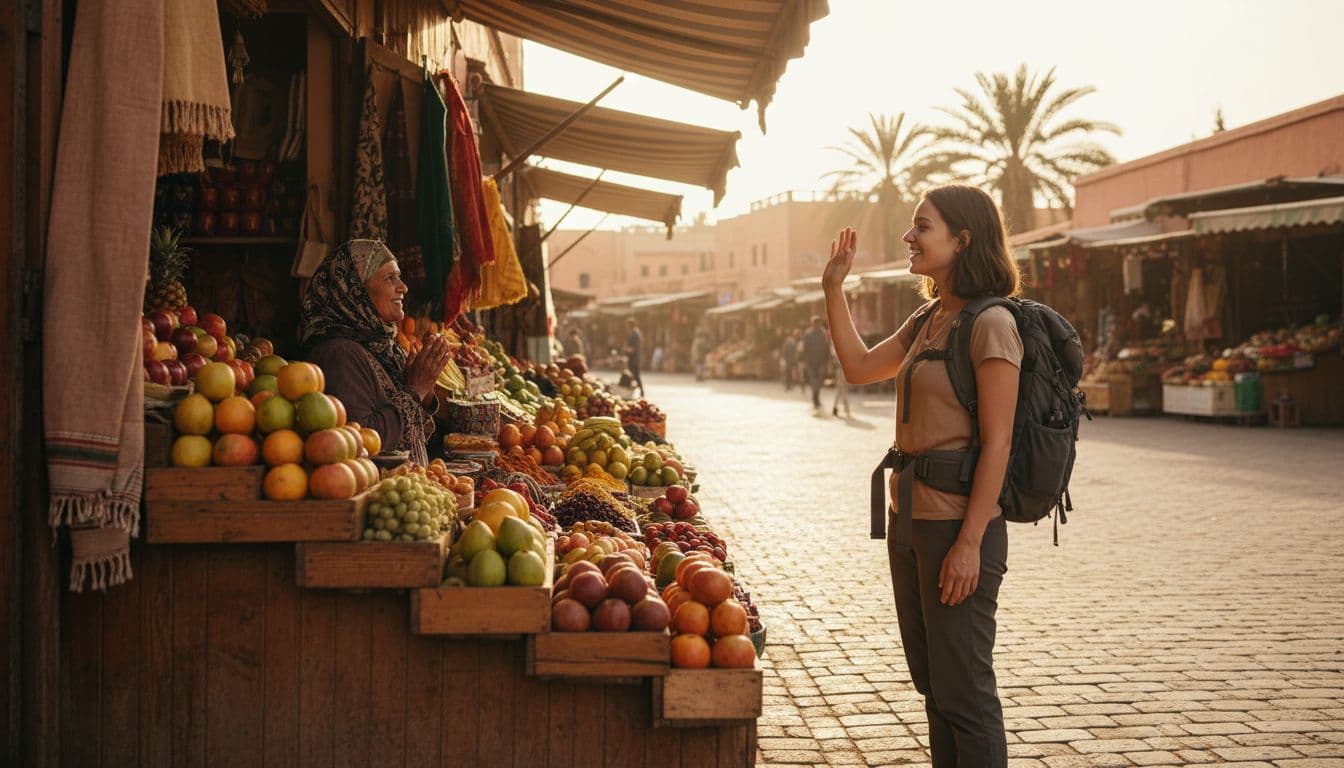 Greeting politely at a market helps you get better help, and friendlier responses (created with AI).
Hello: Use it first at a counter, taxi, or hotel desk. Add eye contact and a small nod. It buys you a second of goodwill.
Please: Say it before the request, not after. Keep your tone light. It turns “Give me water” into “Could I have water, please?”
Thank you: Use it early and often, especially after someone points, repeats, or waits. Gratitude keeps the conversation on your side.
Excuse me: Use it to get attention in a crowded place, or when you bump someone. It also works before a question, like asking for the restroom.
I do not understand: Say it the moment you’re lost. Pair it with a small shrug and a calm smile. It invites simpler words, slower speech, or gestures.
If you only remember one rescue phrase, make it “I do not understand.” It prevents awkward guessing.
A fast cheat sheet in Spanish, French, Mandarin, Arabic, and Japanese
- Hello: Hola, Salut, Nǐ hǎo (你好), Marhaba, Konnichiwa (こんにちは)
- Please: Por favor, S’il vous plaît, Qǐng (请), Min fadlak, Onegaishimasu (お願いします)
- Thank you: Gracias, Merci, Xièxiè (谢谢), Shukran, Arigatou (ありがとう)
- Excuse me: Disculpe, Excusez-moi, Duìbùqǐ (对不起), Afwan, Sumimasen (すみません)
- I do not understand: No entiendo, Je ne comprends pas, Wǒ búmíngbai (我不明白), Ana laa afham, Wakarimasen (わかりません)
Make them stick, and say them with confidence

Photo by Ling App
Save the five phrases in a phone note and pin it. Better yet, set them as your lock screen for the trip. Practice out loud for 30 seconds while you wait for coffee. Also, use voice playback in a translation app to copy the rhythm.
If someone answers too fast, switch to “I do not understand,” smile, and ask them to repeat slowly. For more practice ideas, see this overview of language learning for travel.
Simple pronunciation rules that prevent common mistakes
Speak slower than you think you should. Keep your voice friendly, not loud. Don’t chase perfection, chase clarity. Watch the listener’s face, if they look puzzled, repeat the phrase more slowly.
Conclusion
Hello, please, thank you, excuse me, and “I do not understand” cover more travel moments than a long vocabulary list. These five phrases lower stress, speed up help, and lead to better human moments. Pick your next destination, learn the five today, and practice them once before each travel day. Small words can carry you a long way.
Read More: The 5-4-3-2-1 Packing Method