
Want a one-week Texas trip that doesn’t feel like a sprint? A Texas Triangle road trip makes it easy to see San Antonio, Austin, and Houston in 7 days, without spending half your vacation in the car.
This loop clocks about 550 to 600 miles total and roughly 10 to 12 hours of driving, spread out in short hops. You’ll stick to straightforward routes like I-35, US-290, and I-10, so it’s simple to add river walks, live music, museums, and plenty of food stops along the way.
For the most comfortable weather, plan for late March to early April, or late September to early November. Next, you’ll get a simple day-by-day itinerary plus packing, budget, and traffic tips, so you can enjoy the cities (and the BBQ and Tex-Mex) without guesswork.
Before you go: pick your route, book smart, and avoid traffic headaches
A Texas Triangle road trip is simple on paper, but small planning choices make it feel easy in real life. If it’s your first time, start in San Antonio because it’s a relaxed “anchor” city with solid hotel options and quick access to I-35 and I-10.
For a 7-day loop, expect 2 hotel switches if you do San Antonio, then Austin, then Houston. If you want an even lighter logistics load, base yourself in San Antonio and Austin, then do Houston as a long day trip, but you’ll spend more time driving.
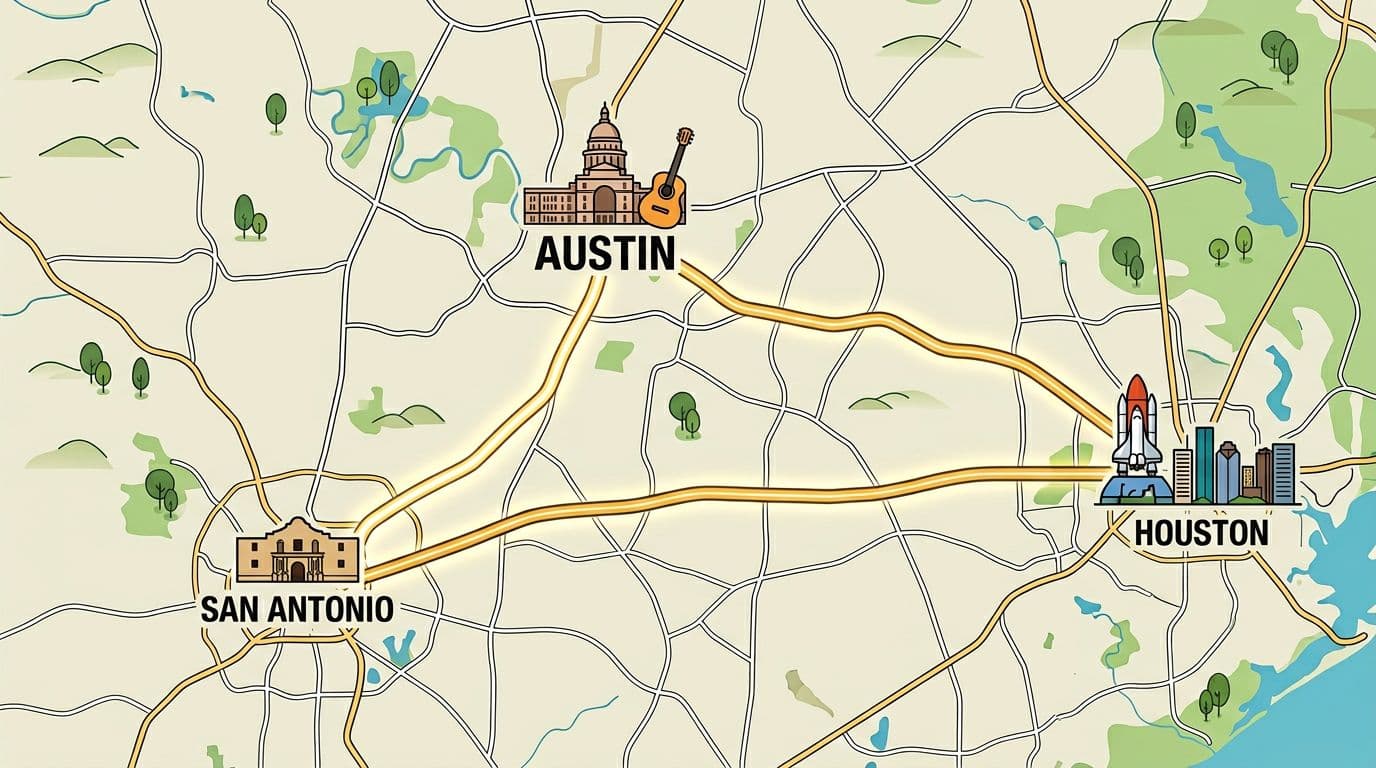
Map-style view of the main Texas Triangle routes, created with AI.
Driving times and the easiest highways between the three cities
These three drives are short enough to fit between check-out and dinner, as long as you respect traffic. Weekday rush hour stacks up fast near downtown Austin, Katy (west Houston), and the I-35 corridor, so timing matters as much as mileage.
Here are the three main legs, with simple routes and realistic drive windows:
| Leg | Distance | Typical drive time | Easiest route |
|---|---|---|---|
| San Antonio to Austin | 80 to 90 miles | about 1 to 1.5 hours | I-35 North |
| Austin to Houston | 165 to 170 miles | about 2.5 to 3 hours | US-290 East or I-10 |
| Houston to San Antonio | about 197 miles | about 3 to 3.5 hours | I-10 West |
If you want a quick reality check on baseline drive time, use sources like San Antonio to Austin drive time before you add stops.
A few timing rules keep this trip from turning into a brake-light parade:
- Leave mid-morning on weekdays (around 10 AM) if you can, because you miss the 7 to 9 AM crush.
- Go early when you need to, especially if you have a timed ticket or a long list that day. A 6 to 7 AM departure often feels like “free time” on Texas highways.
- Avoid 4 to 7 PM near Austin and Houston whenever possible, because that window can turn a simple hop into a slow crawl.
If you’re choosing between “one more stop” and arriving before traffic, pick traffic. Getting stuck is the one souvenir nobody wants.
What to pack and budget for one week in the Texas Triangle
For this loop, packing is less about survival gear and more about staying comfortable when the sun hits hard, sidewalks heat up, and plans run long. Think of your day bag like a small toolkit, it’s there so minor annoyances don’t hijack your schedule.
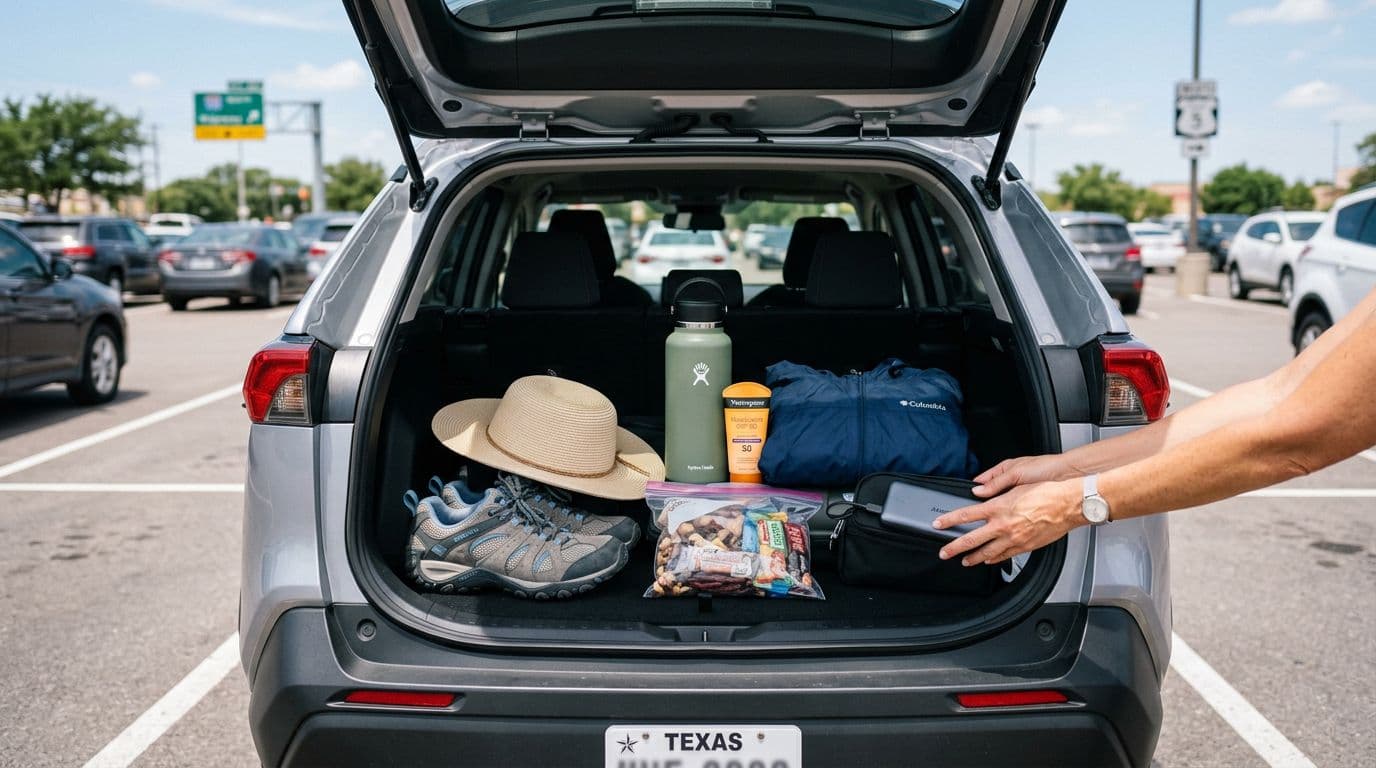
Packed trunk with the basics that keep a Texas week smooth, created with AI.
Bring these essentials so you’re ready for heat, pop-up showers, and long walking days:
- Water (refillable bottle), plus extra in the car.
- Sunscreen and a hat, even in spring.
- Comfy walking shoes, because each city has areas best seen on foot.
- Portable charger, since you’ll use maps, tickets, and parking apps.
- Light rain layer in spring and fall (brief showers happen).
- Simple snacks, especially for the I-10 stretch and late lunch days.
Now, the money question. For 2026, a straightforward budget framework looks like this (your totals depend most on hotels and how often you do paid attractions):
- Gas: Texas gas has been running about $2.50 to $2.60 per gallon in early 2026. Plan extra if you’ll do Hill Country side trips.
- Parking: Budget for paid lots and meters in all three downtowns. Houston and Austin add up quickly if you park near popular districts.
- Hotels: This is usually the biggest line item, especially in spring and fall weekends.
- Attractions: Mix a few paid museums or tours with free neighborhood wandering to keep costs balanced.
- Food: Set a daily range you’re happy with, then “splurge on purpose” for BBQ or a tasting menu once or twice.
Booking timing is where first-timers win or lose stress. In spring and fall, reserve hotels 6 to 8 weeks ahead as a baseline. If your dates overlap big crowd weeks like SXSW in Austin or the Houston Livestock Show and Rodeo, book earlier than that, and lock in any must-do reservations (tours, popular restaurants, and timed-entry attractions) as soon as your hotel is set.
The 7-day itinerary: San Antonio, Austin, and Houston without feeling like you live in the car
This one-week Texas Triangle plan keeps your drives short and your days focused. Each city gets time for a “main event,” plus a low-effort evening so you don’t end up exhausted by day three. You’ll also get a flexible option each day (outdoors vs. indoors), with simple kid-friendly swaps when it helps.
Days 1 and 2 in San Antonio: River Walk nights and mission history by day
Day 1 (arrival day) is for landing softly. You’re here to set the pace for the whole week, so keep it easy and save the heavy sightseeing for tomorrow.
- Morning: Arrive, grab a simple lunch near your hotel, then check in (or drop bags).
- Afternoon: Take a low-pressure stroll downtown. If it’s hot, duck into a café and reset.
- Evening: Walk the River Walk at golden hour, then pick a relaxed dinner spot and call it an early night. If you want a quick orientation first, use the official River Walk map and landmarks to avoid wandering in circles.
For Day 1 flexibility, choose your vibe:
- Outdoors: River Walk stroll plus a short river barge ride.
- Indoors: A long dinner, dessert, and a slow walk back with fewer crowds.
Day 2 is your history day, but you’ll keep it tight. Think of it like a sampler platter, not a marathon.
- Morning: Start with The Alamo before midday crowds. Check the latest entry details on the official Alamo visitor info.
- Afternoon: Head to San Antonio Missions National Historical Park and pick one or two missions (not all four). Add a short riverside walk, then stop while you still feel good. The National Park Service has a solid plan-your-visit guide for hours, locations, and what’s open.
- Evening: Eat in the Pearl District for a trendier feel, or choose Market Square if you want something lively and classic.
Optional add-ons (only if your energy is high):
- Tower of the Americas for a quick view fix.
- Natural Bridge Caverns as a half-day detour (great for kids, and also great when it’s rainy).
Keep Missions day simple: one mission you explore well beats four you rush through.
Days 3 and 4 in Austin: Capitol sights, spring-fed swims, and live music after dark

Photo by Thomas balabaud
Day 3 is a short hop to Austin, so don’t overbook it. The goal is to arrive, park, and start enjoying the city on foot.
- Morning: Check out of San Antonio, then drive to Austin (about 1 to 1.5 hours on I-35 in typical conditions). Try to leave after the morning rush.
- Afternoon: Check in, then do a South Congress (SoCo) stroll. Pop into a few shops, grab an iced coffee, and keep it casual.
- Evening: Pick your water option on Lady Bird Lake, then dinner nearby. A simple plan is the trail for walkers, and a kayak rental for everyone else.
Day 3 flexibility:
- Outdoors: Lady Bird Lake trail at sunset, or a short paddle.
- Indoors: If it’s blazing hot, do a long dinner and a low-key dessert stop instead.
Kid-friendly swap: skip shopping and go straight to a shaded playground in Zilker or an early boat ride.
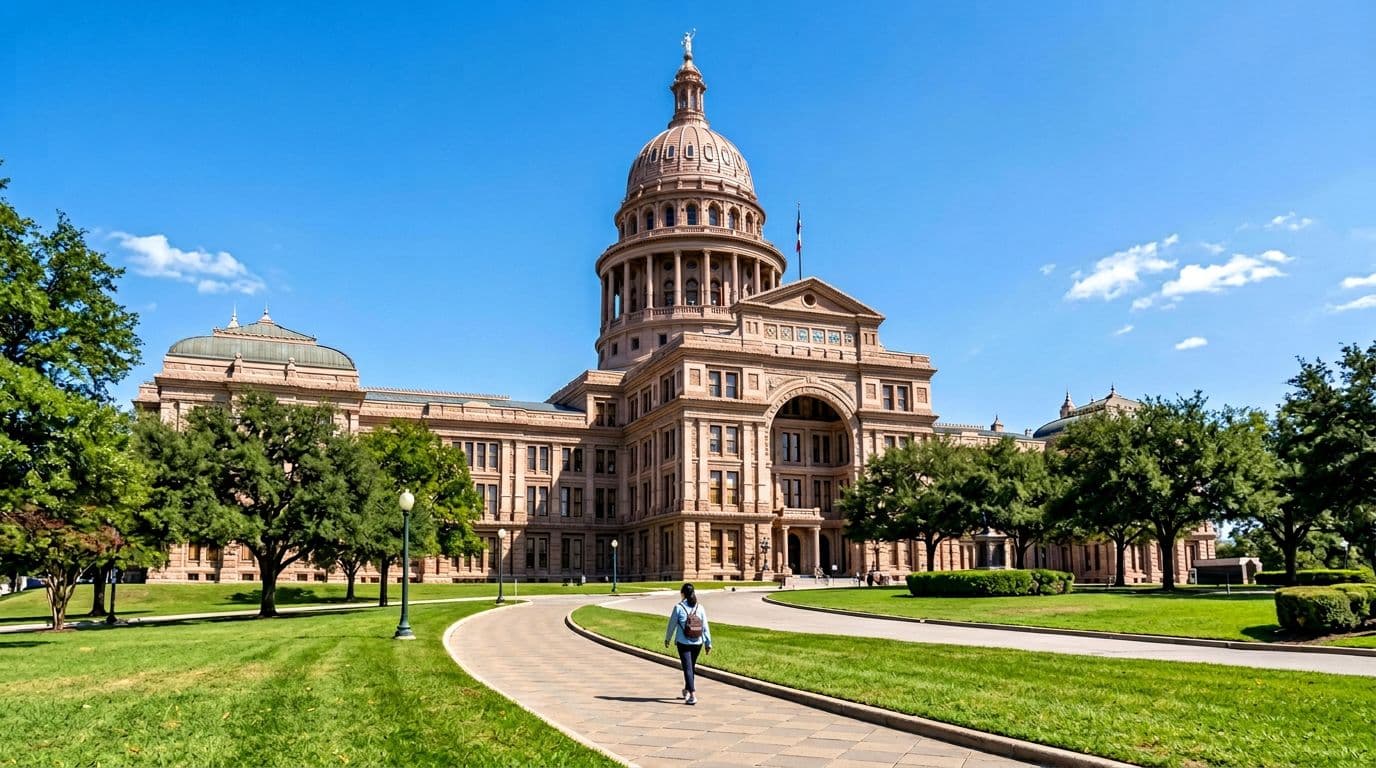 The Texas State Capitol on a clear day, created with AI.
Day 4 is your “Austin classics” day. Keep the middle of the day for swimming or shade so you don’t melt on sidewalks.
- Morning: Tour the Texas State Capitol (it’s a great, air-conditioned reset between walks). Use the official Capitol tour hours and info so you can time it well.
- Afternoon: Head to Zilker Park, then cool off at Barton Springs Pool. Bring a towel, water, and something easy to change into. Plan for a quick line at peak times, and check the City of Austin’s Barton Springs visitor updates before you go.
- Evening: Save your “Austin vibe” for after dark. Do a live music spot if you’re up for it, or settle into a relaxed patio dinner if you’re not.
Simple safety tips for the night:
- Stick together, especially when bar-hopping.
- Plan rides if you’re drinking, and don’t count on finding parking late.
Days 5 and 6 in Houston: space, museums, and a big-city food day
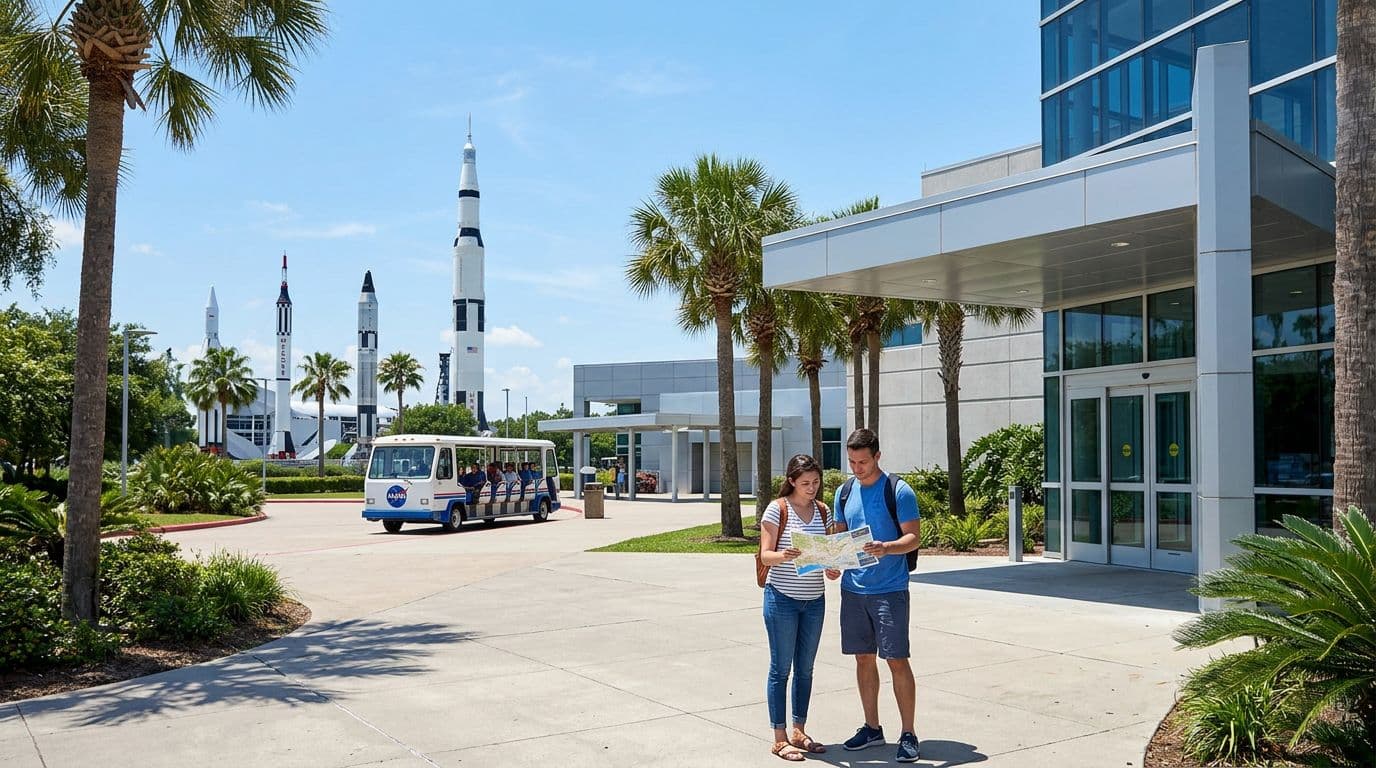 Space Center Houston exterior before a visit, created with AI.
Day 5 is your Austin to Houston drive plus one major attraction. That’s it. You’ll enjoy it more when you don’t stack three “must-dos” on top of it.
- Morning: Drive from Austin to Houston (often 2.5 to 3 hours off-peak, longer if you hit rush hour). Leave mid-morning if you can.
- Afternoon: Spend several hours at Space Center Houston. This is not a quick stop, so commit to it and don’t rush. Before you leave your hotel, confirm timing on Space Center Houston hours.
- Evening: Keep dinner easy near your hotel. Tomorrow is your walking day, so tonight is for recovery.
Day 5 flexibility:
- Outdoors: If the weather is nice, add a short sunset stroll after dinner.
- Indoors: If you’re wiped, do takeout and a quiet night.
Kid-friendly swap: Space Center is already a win, so plan a downtime break mid-visit (snack, shade, water), then keep the evening calm.
Day 6 works best when you pick one main zone and stay there. Houston is big, and zig-zagging burns time fast.
Choose one of these “anchors”:
- Museum District + Buffalo Bayou Park: Pick 1 to 2 museums, then balance it with fresh air and skyline views. A handy reference is this Houston Museum District map so you can group stops.
- Houston Zoo family day: Great if you’re traveling with kids, or if your group likes an active day without driving all over town.
For your big-city food day, think in simple lanes:
- Lunch in the same neighborhood you’re already exploring.
- One “destination meal” at dinner, then dessert close by.
Optional side trip: Galveston for a few hours of beach time. The tradeoff is real, though, because it adds more driving and cuts into museum or park time. If your group needs salt air to feel like it’s vacation, go. If not, stay in the city and keep the day smooth.
Day 7: the drive back to San Antonio, plus easy stops that break up the trip
Day 7 should feel like exhaling. You’re taking I-10 West back to San Antonio (about 3 to 3.5 hours driving time), and the best plan is the one you can do without checking your watch every ten minutes.
- Morning: Pack, fuel up, and leave at a calm time (mid-morning often works well). Start the drive with water and a snack already in the car.
- Afternoon: Make one or two quick breaks only, so the day stays easy. Think “pit stops,” not attractions:
- A coffee stop and a stretch.
- A simple lunch that’s fast to park, order, and leave.
- Evening: Back in San Antonio, keep your final night low-key. Choose one last meal you’ll actually remember, not one you waited an hour for while tired.
Before you call it done, run this quick final-evening wrap-up:
- Return rental details checked (hours, fuel policy, drop-off lane).
- Last meal picked with easy parking.
- Photo backup to the cloud, plus one extra share to a travel buddy (just in case).