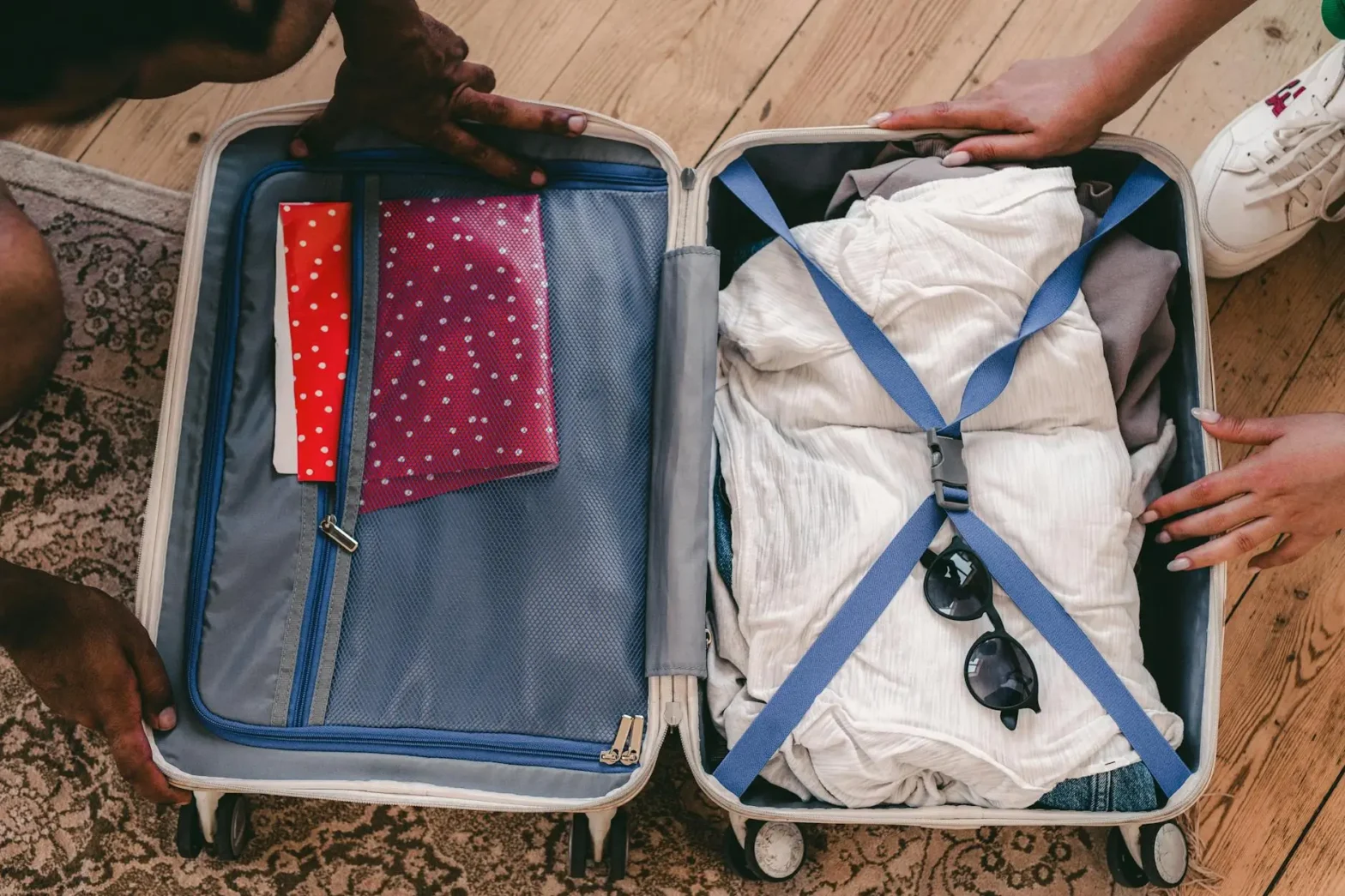
Packing for a month can feel like trying to squeeze a closet into a box. The trick is to stop packing “for every possibility” and start packing a mini wardrobe you’ll actually wear.
That’s what the 5-4-3-2-1 packing method does. It’s a simple clothing count that forces mix-and-match outfits, so you can travel carry-on only and leave the baggage claim behind. Expect to rewear pieces on purpose, and plan quick laundry every 7 to 10 days. Once you accept that rhythm, packing gets much easier.
What the 5-4-3-2-1 packing method really means
The method is a guardrail, not a fashion rule. Different travelers tweak the categories, but the goal stays the same: bring fewer pieces that work together, instead of more pieces that compete for space.
The simple breakdown (and what to count as each item)
A practical version looks like this:
- 5 tops (tees, tanks, button-downs)
- 4 bottoms (pants, shorts, skirt)
- 3 flexible pieces (dress, jumpsuit, cardigan, or workout set)
- 2 pairs of shoes (one worn, one packed)
- 1 outer layer (packable jacket or light coat)
If an item can’t make at least two outfits, it doesn’t earn a spot.
Sleepwear can double as a tee-and-shorts set, and the bulkiest shoes and jacket should go on your body for the flight. For more background on the variations, see this overview of the method from Southern Living’s 5-4-3-2-1 explainer.
Why it works for a full month, not just a weekend
You’re not packing 30 outfits. You’re packing a system. Each top pairs with multiple bottoms, layers change the silhouette, and a single “nice” piece covers dinners and photos. The real secret is planned laundry, not superhuman self-control.
Build a carry-on capsule that makes dozens of outfits
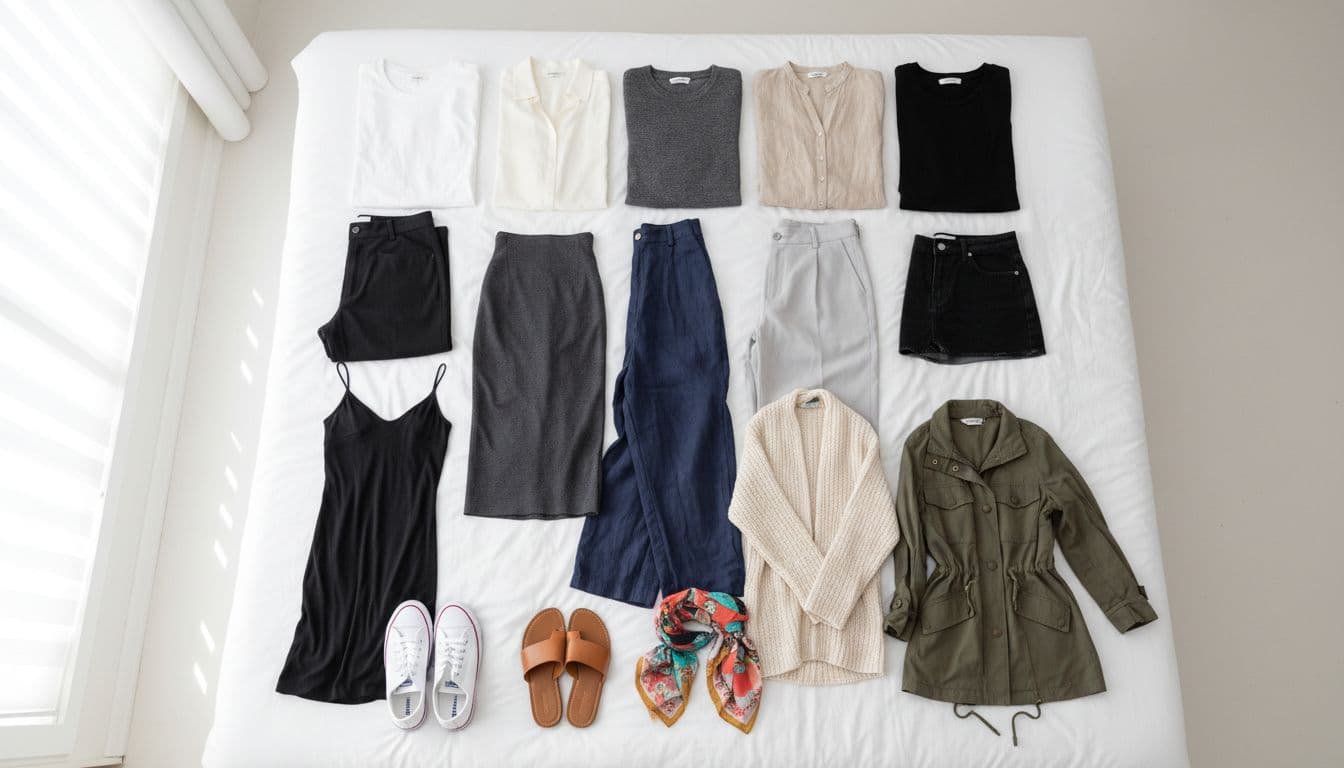
An example capsule layout using the 5-4-3-2-1 counts, created with AI.
Start with a color plan and 1 or 2 “hero” pieces
Pick two neutrals (like black and tan, or navy and gray), then add one accent color. Next, choose one or two hero items, like a bright shirt or patterned skirt, that makes your outfits feel fresh in photos. Favor quick-dry, low-wrinkle fabrics so laundry days don’t wreck your schedule.
Choose bottoms and layers that cover most days
Aim for two everyday bottoms (jeans or travel pants), one warm-weather option (shorts or skirt), and one dressier bottom (or a second pants option). For the “1 outer layer,” match your forecast, but keep it packable. Add a thin cardigan or long-sleeve as your temperature swing buffer.
Make it fit in a carry-on, and keep it working all month
Most major US airlines still cap carry-ons around 22 x 14 x 9 inches (wheels included as of March 2026), while some budget fares allow less, so space discipline matters.
Roll or fold consistently, then use packing cubes to separate tops from bottoms. Stuff socks and chargers into shoe gaps. Also, keep toiletries simple: follow the TSA 3.4 oz (100 ml) liquids rule, and swap in solids when you can.
Laundry is the other half of the plan. Wash underwear and tees in the sink as needed, then do a full load every 7 to 10 days. A small detergent sheet and a lightweight line help a lot. Leave a little empty space for souvenirs, too. For long-trip carry-on ideas, compare notes with Travel + Leisure’s carry-on long-trip packing approach.
Conclusion
The 5-4-3-2-1 packing method works because it’s honest about two things: mix-and-match beats volume, and laundry is part of long travel. Do a quick test pack at home, then make one swap for comfort or fit. Write your 5-4-3-2-1 list, lay everything out, and zip the bag only when each piece pulls its weight.